Questions to Ask Before Booking a Hilo Plumber
Hiring a plumber is rarely something people look forward to. Usually, it starts with stress, a leak that will not stop, a water heater that has gone cold, a drain backing up before guests arrive, or a commercial restroom issue that cannot wait until next week. In Hilo, those moments feel even more urgent because plumbing problems tend to affect the whole rhythm of a home or business fast. The right call can solve the problem cleanly. The wrong one can leave you paying twice, first for the attempted repair, then for the fix that should have happened in the first place.
Most people begin with a quick search for a plumber near me and start dialing. That is understandable, but a short conversation before you book can tell you a great deal about the company you are considering. It can also help you separate someone who is organized, properly credentialed, and experienced from someone who is vague, rushed, or not a fit for your job.
A good Hilo plumber should not be annoyed by thoughtful questions. A professional should expect them. In fact, the best contractors usually answer clearly because they know an informed customer makes the job smoother for everyone.
Start with the question that matters most, are you properly licensed in Hawaii?
This is the first question for a reason. In Hawaii, a plumber’s license is required for anyone performing plumbing work. That is not a minor technicality. It is the baseline that tells you the person doing the work has met the state’s licensing requirements.
Hawaii also gives consumers a way to check. The Department of Commerce and Consumer Affairs, through its public licensing system, allows you to verify license status, original licensure dates, expiration dates, and disciplinary history. That means you do not have to rely only on what someone tells you over the phone. You can confirm it yourself before the appointment is booked.
That one step filters out a surprising amount of risk. If a company hesitates when you ask for its license information, changes the subject, or tells you not to worry about it, that is your answer. You should worry about it.
There is another practical angle here. Hawaii’s Board of Electricians and Plumbers oversees licensing, renewals, and continuing competency requirements. For active licensed plumbers, continuing competency requirements tied to the 2021 Uniform Plumbing Code apply during the July 1, 2024 through June 30, 2027 renewal period. That matters because plumbing is not just a wrench-and-pipe trade. Code knowledge, current standards, and proper installation methods matter, especially when the work affects safety, drainage, and hot water systems.
A competent shop will usually give you the license name or number without any awkwardness. If you are speaking with an office manager rather than the technician, they should still know how to provide it.
The best first-call questions
If you only have a few minutes, these are the questions worth asking before you commit:
- Are you licensed in Hawaii, and can I verify your license status through the state system?
- Have you handled this specific type of job before, such as water heater repair, solar water heater repair, drain cleaning, sewer line repair, or leak detection?
- How do you charge for diagnosis and repair, and what might change the final price?
- If this is urgent, how do you handle emergency plumber calls and scheduling?
- Who will actually perform the work, and what information can you give me before the appointment?
Those questions sound simple, but they reveal almost everything you need to know. They tell you whether the company respects process, understands the work, communicates clearly, and can explain what happens next.
Ask whether they regularly handle your type of problem
Plumbing is broad. A company https://spencerayke636.laurelcurrent.com/posts/commercial-plumber-services-advertised-on-the-big-island can be perfectly competent in one area and not be the best fit for another. That is why “Do you do plumbing?” is too general to be useful.
A better approach is to describe the actual issue and ask whether they handle that category of work regularly. In Hilo, some companies advertise a wide mix of services including drain cleaning, sewer line repair, leak detection, residential plumbing repairs, emergency plumbing, water heater installation, solar water heater service, and commercial plumbing work. That range is helpful, but you still want to know whether your job is something they do often, not something they might try to fit in.
If your kitchen sink has been slow for three months and is now fully backed up, ask directly about drain cleaning and what they usually look for before clearing a line. If your hot water disappeared, be specific about whether you need standard water heater repair or whether you have a solar system and may need solar water heater repair. Those are not interchangeable conversations. If you are seeing unexplained water on a floor or a spike in water use, ask about leak detection rather than just “a leak.” The wording matters because it helps the company understand whether this is a visible repair, a hidden line issue, or a more involved diagnostic call.
Commercial property owners should be just as direct. A commercial plumber may need to deal with different usage demands, timing pressures, and coordination issues than a basic residential service call. If the property is a restaurant, office, rental building, or retail site, say so early. It changes the conversation.
The point is not to quiz the company for sport. The point is to hear whether the answers sound practiced and grounded. Someone familiar with the work will often ask clarifying questions right away. They may want to know whether the drain issue is isolated to one fixture or several, whether the water heater is producing no hot water or inconsistent hot water, or whether the leak appears at a certain time of day. That kind of follow-up is a good sign. It means they are thinking diagnostically, not just trying to put you on the schedule.
Get clear on how they diagnose the problem
Homeowners often focus on repair price too early. That is understandable, but plumbing problems are not always straightforward from a phone description. A toilet that “keeps clogging” may be a simple fixture issue, or it may point to a deeper drainage problem. Water pooling near a wall may come from a visible supply line, or it may have migrated from somewhere else entirely. A company that gives an absolute repair price without discussing diagnosis can sound convenient, but it can also signal guesswork.
A better question is, “How do you approach diagnosis, and is there a separate charge for it?” That phrasing does two useful things. First, it acknowledges that diagnosis is part of professional labor. Second, it gives the company room to explain how pricing works before you are surprised later.
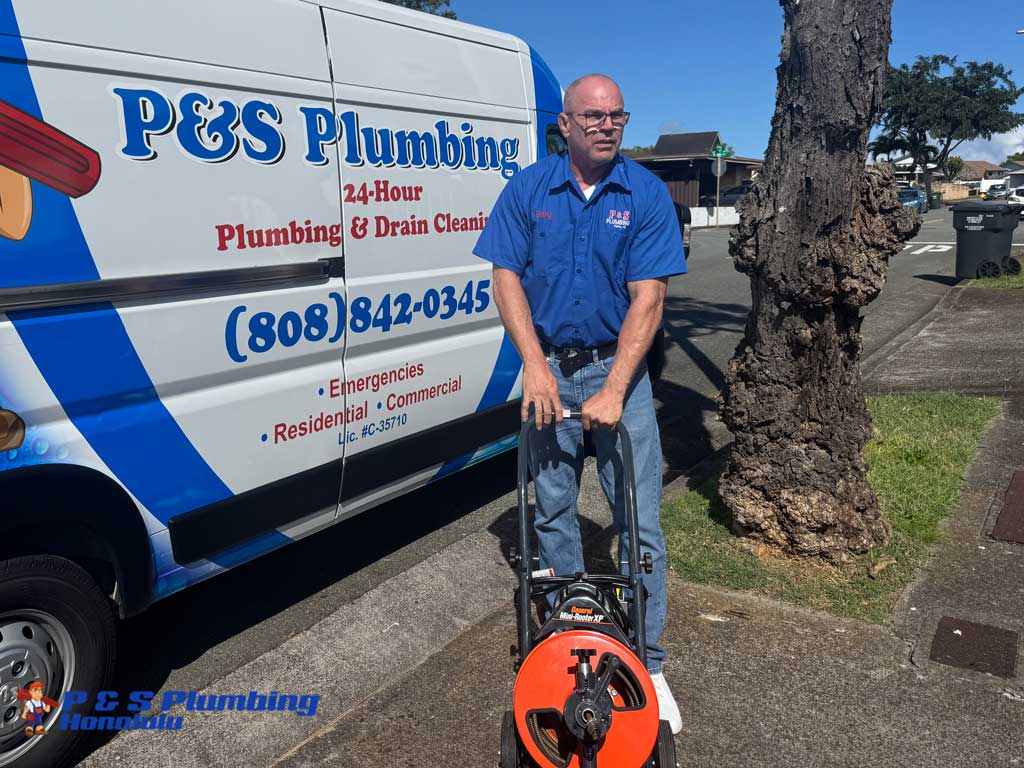
You are listening for clarity. Can they explain the difference between the initial visit and the actual repair? Do they tell you what factors might affect cost once they inspect the system? Are they careful about making promises before seeing the issue? Precision here is a mark of professionalism, not evasiveness.
There is a big difference between a company that says, “We will need to inspect it to know exactly what is going on,” and one that seems unable to explain anything at all. The first response is realistic. The second is a warning.
If the problem feels urgent, ask what “emergency” really means
Many people search for an emergency plumber when the situation is stressful, but emergency service can mean different things from one company to the next. It is worth asking how they define an emergency, what kinds of calls they prioritize, and what sort of response you can realistically expect.
A burst line, active leak, sewer backup, or complete loss of a critical plumbing function may justify immediate attention. A slow drain that has been sluggish for two weeks might not. Good companies usually set expectations clearly. They will tell you whether they can offer same-day help, the next available window, or only a diagnostic visit at first.
This part of the conversation matters because urgency can affect both scheduling and cost. Even if you do not discuss exact numbers on the phone, you should still ask whether emergency service changes the rate or service window. You are not trying to negotiate before anyone arrives. You are trying to avoid confusion later.
I have seen homeowners make the mistake of using the word “emergency” when the issue was inconvenient but stable, only to skip a better-qualified company that could have handled the repair the next morning in a calmer, more efficient way. On the other hand, people sometimes understate a serious problem and lose valuable time. If water is actively escaping, if wastewater is involved, or if the property cannot function normally, say that clearly.
Ask who will actually show up
This question is often overlooked, and it should not be. When you book a service call, you want to know whether the person arriving is the licensed plumber, someone working under that license, or a dispatcher simply assigning whoever is available.
There is nothing inherently wrong with teams or delegated service work. Many legitimate companies operate that way. The issue is transparency. You should know who is coming, what kind of information they will have before arrival, and whether the office has communicated your problem accurately.
This can be especially important for specialized calls. If you mentioned solar water heater repair when booking, you do not want a technician arriving under the impression that it is a standard faucet replacement. If you explained that your issue appears to involve sewer line repair, you want the company to know that before the truck rolls out. Mismatched expectations waste time and often money.
A short, practical question works well here: “Who will be handling this, and will they know the details I just gave you?” A well-run office can answer that easily.
For water heater issues, be specific from the start
Water heater calls often get described too loosely. “No hot water” is a symptom, not a full description. If you are booking a Hilo plumber for water heater repair, tell them what kind of system you have and what exactly is happening. Does the water start hot and then turn lukewarm within a few minutes? Has hot water stopped altogether? Are you seeing any visible leaking around the unit?
If the property uses a solar setup, say that immediately and ask whether the company handles solar water heater repair specifically. That matters because the service call may require different experience than a conventional system. A company that already works with both standard and solar systems is more likely to ask the right questions at booking and arrive better prepared.
This is one of those places where a few extra details can save a service visit from turning into a fact-finding exercise. Even if the final diagnosis still has to happen in person, the phone call should narrow the field.
Drain and sewer questions deserve more detail than most people give them
Drain cleaning sounds simple until it is not. A bathroom sink that drains slowly is one kind of problem. Repeated backups affecting multiple fixtures can point to something more serious. The same is true for sewer line repair. A homeowner may use the phrase casually when the issue is still uncertain, but if wastewater is backing up, if more than one drain is involved, or if the problem returns right after a temporary fix, say so.
When speaking with the company, describe patterns rather than conclusions. Tell them whether the issue is isolated or widespread, recent or recurring, slow or sudden. Those details help them judge whether this sounds like a basic drain cleaning call or a larger drainage concern that needs closer inspection.
One reason this matters is that recurring drainage problems often tempt people into cheap, repeated short-term fixes. That can turn one service issue into several invoices. A better plumber will not promise a magic answer over the phone. They will usually want to understand the symptoms well enough to send the right person for the right job.
Leak detection is not just about finding water on the floor
Leaks are tricky because the visible evidence is often not where the problem began. Homeowners sometimes wait too long because they are looking for dramatic signs, a dripping pipe under a sink, a puddle near a fixture, or water running down a wall. In practice, the first clues may be much smaller. A faint musty smell, discoloration, an unexplained damp area, or a bill that seems out of character can all prompt a leak detection call.
When booking, explain what you have actually observed, not just what you suspect. If you say, “I think there is a leak somewhere,” the office has very little to work with. If you say, “There is damp flooring near a bathroom wall, but I cannot see the source,” or “We are noticing water where there should not be any and need leak detection,” that gives them something more useful.
A seasoned plumber often thinks in patterns. Visible fixture leak, hidden supply issue, drainage problem, water heater leak, exterior line concern, all of those lead to different first steps. The more specific you are, the more likely the appointment will be booked correctly.
Commercial calls require a different conversation
If you are booking for a business, do not assume the same script applies. A commercial plumber may need to work around customers, staff, tenant access, building policies, or service-hour restrictions. Even a relatively ordinary repair can become complicated if the work disrupts operations.
This is where owners and managers do themselves a favor by being direct. Tell the plumbing company what kind of property it is, what the operational impact looks like, and whether timing is critical. A clogged restroom in a small office is inconvenient. A restroom or drain issue in a customer-facing business can become a same-day priority.
You should also ask whether they handle commercial plumbing work routinely. That does not mean residential plumbers are incapable. It means commercial jobs often involve a different pace and set of expectations. Companies familiar with that environment usually understand the need for communication, access planning, and efficient scheduling.
Pay attention to how they talk, not just what they say
One of the most useful indicators on a booking call is tone. Do they listen? Do they interrupt? Do they overpromise? Do they speak in absolutes before they know the facts? The content of the answers matters, but so does the manner.
Professionals usually have a calm way of sorting information. They ask sensible follow-up questions. They explain what they can know now and what they will only know after inspection. They do not need theatrical confidence. In fact, too much certainty on limited information often points to poor judgment rather than expertise.
A rushed or disorganized call does not always mean the work will be poor, but it often predicts communication problems. And communication problems are expensive in plumbing. They lead to missed expectations, incomplete preparation, and disputes about what was or was not authorized.
A few details to have ready before you call
If you want a smoother booking process, it helps to gather a handful of basics first:
- A short description of the problem, including when it started and whether it is getting worse.
- The type of system or fixture involved, such as a standard water heater or a solar water heater.
- Whether the issue affects one fixture or multiple areas of the property.
- Whether water is actively leaking, backing up, or creating a time-sensitive health or access issue.
- Your availability and any access details the plumber should know before arrival.
That is usually enough to turn a vague service request into a productive booking call. It also makes it easier for the office to decide whether you need a general plumbing visit, an emergency plumber, a leak detection appointment, or someone better suited for drainage or sewer work.
The goal is not a perfect phone diagnosis, it is a better hire
People sometimes think they need to sound knowledgeable when calling a plumber. They do not. What matters is asking the right questions and paying attention to the quality of the answers. A good plumber does not expect you to diagnose your own system. They do expect clear communication, and they should be able to provide the same.
For homeowners and property managers in Hilo, the strongest starting point is simple. Verify the Hawaii license through the state system. Confirm that the company handles the kind of work you actually need, whether that is water heater repair, solar water heater repair, drain cleaning, sewer line repair, leak detection, emergency plumbing, or commercial service. Ask how diagnosis and scheduling work. Make sure the person showing up is prepared for the problem you described.
That short conversation can save you from a poor fit, a delayed repair, or a job that starts with confusion. And when plumbing is involved, clarity at the start is often the cheapest part of the whole process.
Name: P&S Plumbing Hilo
Address: 879 Manono St B, Hilo, HI 96720, United States
Phone: 808-935-3892
Website: https://www.psplumbinghawaii.com/locations/hilo/
Email: [email protected]
Hours:
Sunday: Open 24 hours
Monday: Open 24 hours
Tuesday: Open 24 hours
Wednesday: Open 24 hours
Thursday: Open 24 hours
Friday: Open 24 hours
Saturday: Open 24 hours
Time zone: Hawaii-Aleutian Time
Open-location code / Plus code: PW6J+35 Hilo, Hawaii, USA
Map/listing URL: https://www.google.com/maps/search/?api=1&query=Google&query_place_id=ChIJ4Wwh4jGFTIQRdIh8RLXElbM
Embed iframe:
Socials:
https://web.facebook.com/psplumbinghilo/
https://www.instagram.com/psplumbinghilo
https://ph.pinterest.com/psplumbinghilo/
https://x.com/psplumbinghilo
https://www.linkedin.com/in/psplumbinghilo
P&S Plumbing Hilo provides plumbing services from its Hilo location on Manono Street.
The official Hilo page lists plumbing support for Hilo and surrounding communities, with Hilo phone service available at 808-935-3892.
P&S Plumbing provides residential plumbing, commercial plumbing, drain cleaning, sewer-line service, water heater work, plumbing repairs, leak detection, fixture repair, bathroom plumbing, kitchen plumbing, and emergency plumbing support.
The official contact page lists the Hilo location at 879 Manono St, Unit B, Hilo, HI 96720.
The company’s official site lists Hawaii State License Number CT-35710 and describes P&S Plumbing as licensed and insured.
Customers can contact P&S Plumbing Hilo for clogged drains, sewer-line concerns, water heater service, plumbing leaks, fixture repairs, toilet issues, kitchen plumbing, bathroom plumbing, commercial plumbing, residential plumbing, and urgent plumbing requests.
For plumbing service in Hilo and East Hawaii, call 808-935-3892 or visit https://www.psplumbinghawaii.com/locations/hilo/
The supplied public map listing uses plus code PW6J+35 Hilo, Hawaii, USA and can help customers find P&S Plumbing Hilo near Manono Street.
Popular Questions About P&S Plumbing Hilo
What does P&S Plumbing Hilo provide?
P&S Plumbing Hilo provides plumbing services for residential and commercial customers, including drain cleaning, sewer and drain service, water heater service, plumbing repairs, fixture repair and installation, leak detection, bathroom plumbing, kitchen plumbing, and emergency plumbing.
Where is P&S Plumbing Hilo located?
The official contact page lists the Hilo location at 879 Manono St, Unit B, Hilo, HI 96720.
What phone number should Hilo customers call?
The official website lists Hilo phone number 808-935-3892.
What is the email address for P&S Plumbing Hilo?
What are P&S Plumbing Hilo’s hours?
The listing hours show P&S Plumbing Hilo as open 24 hours a day, seven days a week, Hawaii-Aleutian Time. Customers should call 808-935-3892 to confirm service availability for urgent needs.
Is P&S Plumbing licensed?
The official Hilo page lists Hawaii State License Number CT-35710. Customers can confirm license status directly with the relevant Hawaii licensing authority before hiring.
Does P&S Plumbing Hilo offer emergency plumbing?
Yes. The official Hilo page references emergency services, and the supplied listing shows 24-hour availability.
Does P&S Plumbing Hilo handle water heaters?
Yes. P&S Plumbing’s official site lists water heater repair and installation services, including service for the Big Island and Hilo.
What areas does P&S Plumbing serve from Hilo?
The official site lists service for Hilo and surrounding areas, with broader P&S Plumbing service across the Big Island and Oahu.
How do I contact P&S Plumbing Hilo?
Call 808-935-3892 or visit https://www.psplumbinghawaii.com/locations/hilo/. Social profiles: Facebook, Instagram, Pinterest, X, and LinkedIn.
Landmarks Near Hilo, HI
Manono Street: The street listed for P&S Plumbing Hilo and a practical reference point for the Hilo location.
Kamehameha Avenue: A major Hilo waterfront route connecting downtown, commercial areas, and local service corridors.
Hilo Bayfront: A central Hilo waterfront landmark near downtown businesses and residential areas.
Downtown Hilo: A major East Hawaii business, civic, and residential district served by local plumbing contractors.
Hilo Farmers Market: A well-known downtown Hilo landmark and local reference point.
Hilo Harbor: A major commercial harbor and industrial-area landmark near Hilo service routes.
Prince Kūhiō Plaza: A major Hilo shopping landmark near residential and commercial areas.
University of Hawaiʻi at Hilo: A major education landmark serving the Hilo area.
Hawaiʻi Community College: A local education landmark near central Hilo routes.
Hilo International Airport: A major East Hawaii transportation landmark near commercial and residential service areas.
Liliʻuokalani Gardens: A well-known Hilo park and waterfront landmark near Banyan Drive.
Banyan Drive: A recognizable Hilo hotel and waterfront corridor close to Hilo Bay.
Wailuku River State Park: A major natural landmark near Hilo, including Rainbow Falls and nearby residential areas.
Panaʻewa Rainforest Zoo and Gardens: A Hilo-area landmark southeast of downtown.
Keaukaha: A coastal Hilo community with homes, parks, and local plumbing service needs.
For residential plumbing, commercial plumbing, drain cleaning, sewer-line repair, water heater service, leak detection, fixture work, bathroom plumbing, kitchen plumbing, or emergency plumbing near these Hilo and East Hawaii landmarks, contact P&S Plumbing Hilo at 808-935-3892 or visit https://www.psplumbinghawaii.com/locations/hilo/